
11 Years After 2014 Floods, Is Jammu & Kashmir Any Safer Today?
Srinagar, Sep 6:
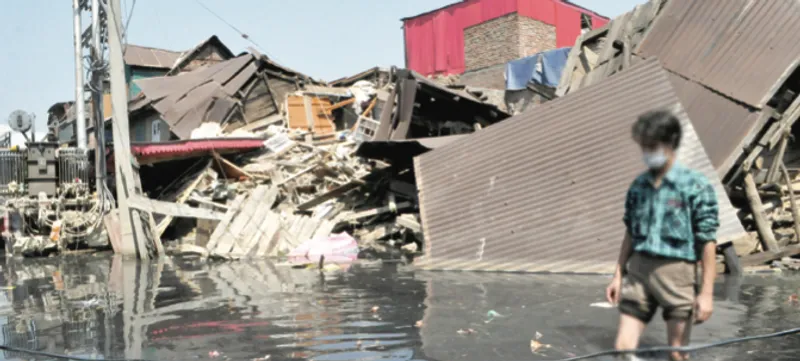
September 7 marks 11 years since the devastating 2014 floods in Jammu and Kashmir — a catastrophe that left a deep scar across the region. What started as heavy rainfall turned into one of the worst natural disasters in the region’s history.
A Disaster That Changed Everything
In 2014, unusually heavy rains began in late August and intensified by early September. Some areas recorded over 500 mm of rainfall in just a few days — levels not seen in more than a century.
As a result, the Jhelum, Chenab, and Tawi rivers overflowed, breaching embankments and flooding vast areas. Parts of Srinagar and Jammu were submerged within hours.
Widespread Destruction and Loss
Entire villages were wiped out. Major parts of Srinagar became inaccessible. Over 2,500 villages across districts like Anantnag, Pulwama, Kulgam, Baramulla, Budgam, Ganderbal, Rajouri, Poonch, and Reasi were affected.
Infrastructure crumbled:
-
Hospitals were shut
-
Bridges collapsed
-
Roads vanished
-
Power and communication lines failed
According to official data, 287 people died and over 20–30 lakh were affected. Nearly 10 lakh residents were forced to flee or take shelter on rooftops and in relief camps.
The economic loss was estimated at ₹60,000 crore. Over 3 lakh hectares of crops and orchards were destroyed. Small businesses and tourism took a massive hit.
Rebuilding: Promises and Projects
Post-flood efforts included the Prime Minister’s Development Package (PMDP) and the World Bank-funded Jhelum and Tawi Flood Recovery Project (JTFRP).
These aimed to:
-
Dredge rivers
-
Reinforce embankments
-
Restore wetlands and natural barriers
-
Improve disaster response
Billions were invested, but progress has been slow and patchy.
Where Do Things Stand Today?
Eleven years later, many promises remain unfulfilled. Recent rains have again exposed the fragile flood protection systems.
-
Jhelum’s flood-carrying capacity remains limited.
-
Key flood protection projects are incomplete.
-
Wetlands, crucial for absorbing floodwater, have shrunk from 13,000 hectares to under 5,000, mainly due to urban sprawl and encroachment.
This year’s moderate flooding, though less intense, is a stark reminder of how little has changed.
Landslides and New Threats
In recent years, landslides across Jammu, Kishtwar, and Kashmir have killed hundreds, including pilgrims, and displaced thousands more.
Climate change has increased the frequency and intensity of such events. Yet, the region still lacks comprehensive early warning systems and rapid-response mechanisms.
Time Is Running Out
“The water rose so fast, we lost everything in hours,” recalls a 2014 flood survivor.
That trauma still lingers. But the urgent need for action remains largely unmet.
As extreme weather events become more common, experts call for a fresh assessment of disaster risks and stronger flood-prevention infrastructure — actions that should have started 11 years ago.

Recent Comments