
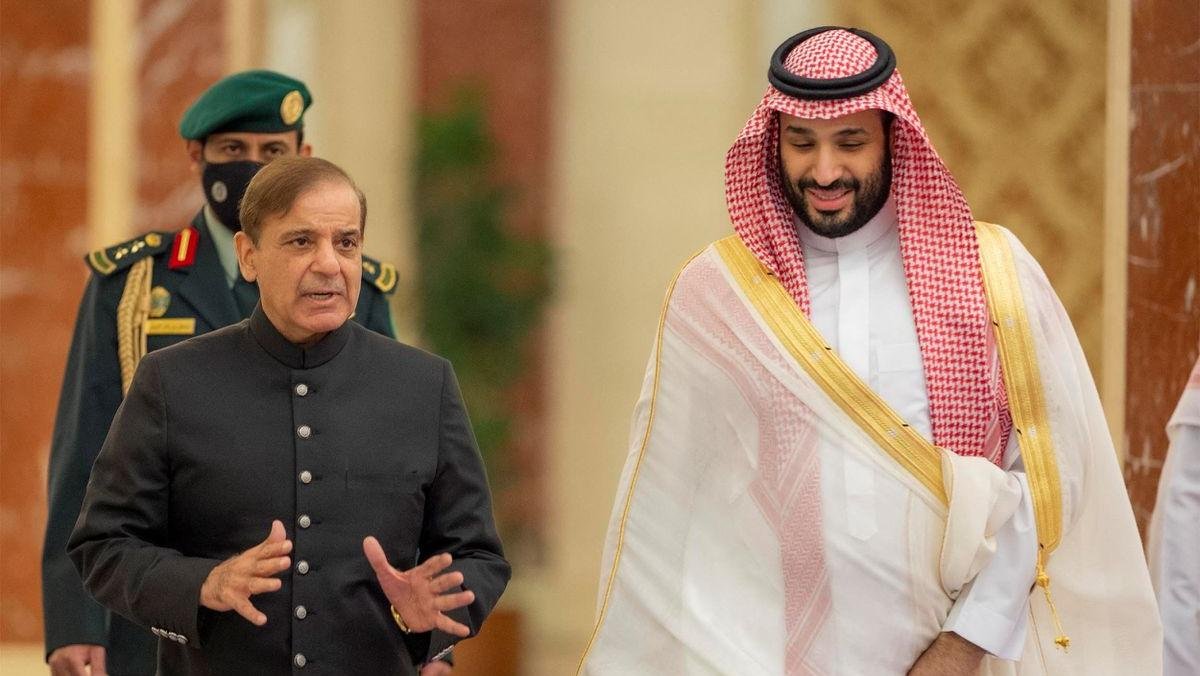
New Delhi, Sep 18: Saudi Arabia and Pakistan have signed a landmark “Strategic Mutual Defence Agreement” during Pakistan Prime Minister Shehbaz Sharif’s state visit to Riyadh, a move that New Delhi said it will study carefully for its implications on India’s national security and regional stability.
The agreement, signed at the Al-Yamamah Palace between Saudi Crown Prince Mohammed bin Salman and Prime Minister Sharif, carries a key clause declaring that “any aggression against either country shall be considered an aggression against both.” The joint statement described the pact as building on a “historic partnership extending for nearly eight decades” rooted in bonds of brotherhood, Islamic solidarity, and shared strategic interests.
Also present during the meeting was Pakistan Army Chief, Field Marshal Asim Munir, underlining the defence and security-heavy focus of the visit.
India’s measured response
Reacting to the development, the Ministry of External Affairs (MEA) acknowledged that the pact had been under consideration for some time and framed it as a formalisation of an existing arrangement.
“We have seen reports of the signing of a strategic mutual defence pact between Saudi Arabia and Pakistan. The government was aware that this development, which formalises a long-standing arrangement between the two countries, had been under consideration,” MEA spokesperson Randhir Jaiswal said in a statement.
“We will study the implications of this development for our national security as well as for regional and global stability. The government remains committed to protecting India’s national interests and ensuring comprehensive national security in all domains,” he added.
Broader regional context
The signing of the agreement comes against the backdrop of heightened tensions between India and Pakistan following the deadly terror attack in Pahalgam earlier this year, in which dozens of security personnel and civilians were killed. India launched “Operation Sindoor” in response, striking terror infrastructure across the Line of Control, leading to a sharp deterioration in bilateral relations.
The pact also reflects Riyadh’s increasing engagement with Islamabad, though observers note that it comes at a time when India-Saudi relations have been steadily deepening under Prime Minister Narendra Modi.
India-Saudi ties
New Delhi and Riyadh have expanded their cooperation over the past decade, particularly in trade, investment, counter-terrorism, and energy security. India is now Saudi Arabia’s second-largest trading partner.
During Prime Minister Modi’s state visit to Riyadh in April this year, Saudi Arabia strongly condemned the Pahalgam terror attack. A joint statement then had affirmed that “there cannot be any justification for any act of terror for any reason whatsoever,” and both sides had called on all states to dismantle terrorism infrastructure and bring perpetrators to justice.
Prime Minister Modi has visited Saudi Arabia three times, and in 2016 he was awarded the Kingdom’s highest civilian honour, the King Abdulaziz Sash, marking the warmth in bilateral ties.
Significance of the pact
While Pakistan and Saudi Arabia have long maintained close military and defence ties, the formalisation of a mutual defence clause is being seen as a significant step that could have ramifications for regional security dynamics.
For India, which has cultivated closer strategic, economic, and counter-terrorism cooperation with Riyadh in recent years, the pact presents both a diplomatic and strategic challenge, particularly at a time of heightened India-Pakistan tensions.
The MEA’s response suggests that New Delhi will continue to closely monitor the development while reinforcing its own strategic partnership with Saudi Arabia.

Recent Comments