
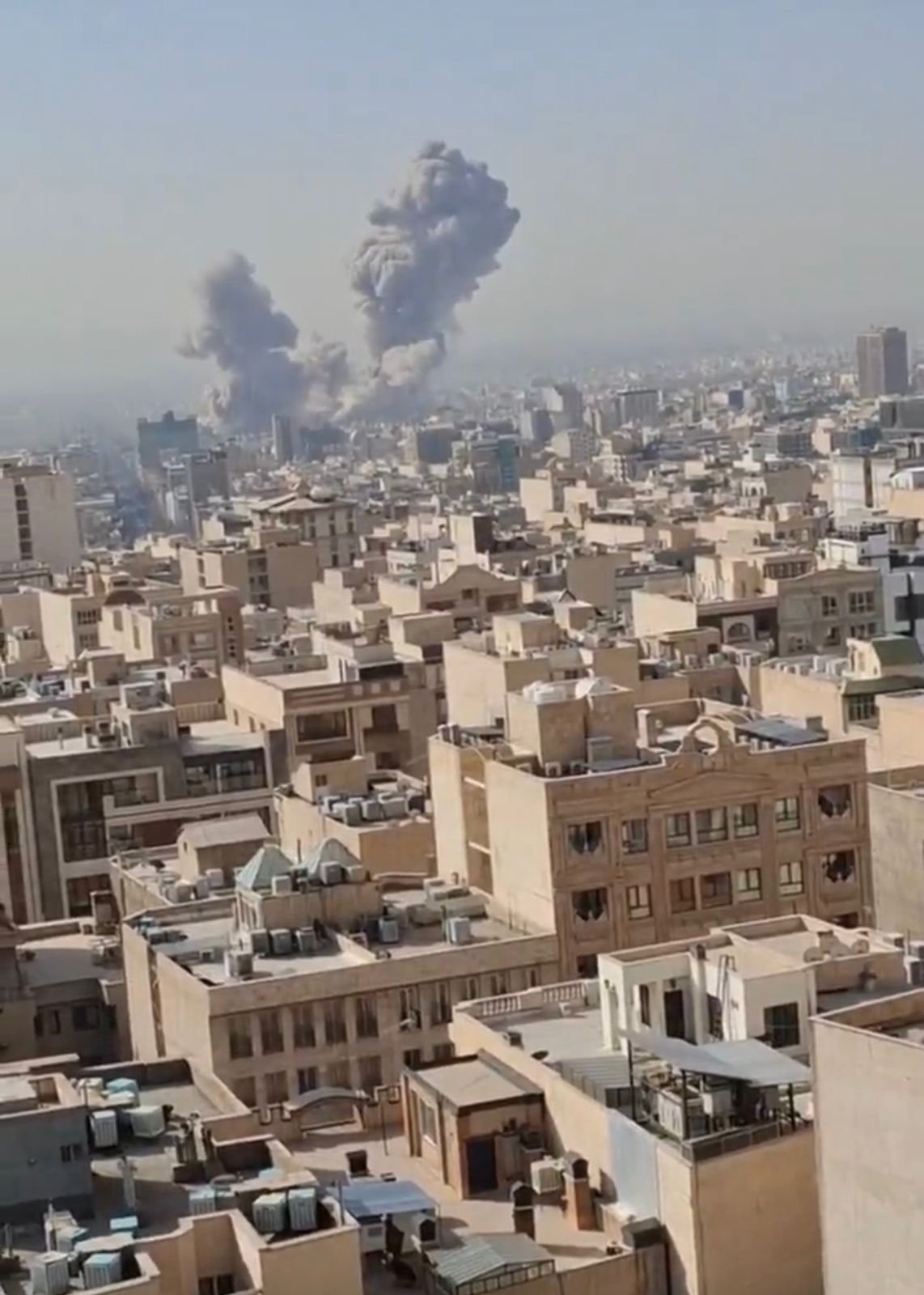
DUBAI/TEHRAN, Feb 28: Israel on Saturday launched a rare daylight strike on Iran’s capital Tehran, triggering multiple explosions and sending a thick plume of smoke rising over the city’s downtown area. The first apparent strike reportedly occurred near the offices of Iran’s Supreme Leader Ayatollah Ali Khamenei, intensifying already heightened tensions in the region.
According to a U.S. official and a person familiar with the operation, the United States participated in the attack, though the extent of Washington’s involvement was not immediately clear. Both officials spoke on condition of anonymity due to the sensitive nature of the military operation.
It remains uncertain whether the 86-year-old Khamenei was present at his office during the strike. He has not been seen publicly for several days as tensions between United States and Iran have escalated.
Authorities in Tehran shut down roads leading to Khamenei’s compound as additional explosions were reported across the capital. Iranian state television confirmed blasts in the area but did not provide details on casualties or the cause of the explosions.
The strike comes at a time when the United States has reportedly assembled a significant fleet of fighter jets and warships in the region to pressure Iran into reaching a deal over its nuclear program. Former U.S. President Donald Trump had earlier pushed for an agreement aimed at constraining Iran’s nuclear activities, viewing the current domestic unrest in Iran as a potential opportunity to secure concessions.
Iran, however, maintains that it has the sovereign right to enrich uranium and has consistently refused to negotiate over its long-range missile program or its support for armed groups such as Hamas and Hezbollah.
Israeli Defense Minister Israel Katz described the operation as an action taken “to remove threats,” without elaborating further on its objectives or scope.
Simultaneously, sirens sounded across Israel, which also closed its airspace as a precautionary measure. The Israeli military issued what it called a “proactive alert” to prepare the public for the possibility of missile launches toward Israeli territory.
In response, Iran shut down its own airspace and cut mobile phone services across parts of the country. Tehran had previously warned that any attack involving American forces would prompt retaliation against U.S. military personnel and bases stationed throughout the region.
As of now, Iranian authorities have not released any official casualty figures. The situation remains fluid, with fears of further escalation looming across the Middle East.

Recent Comments