
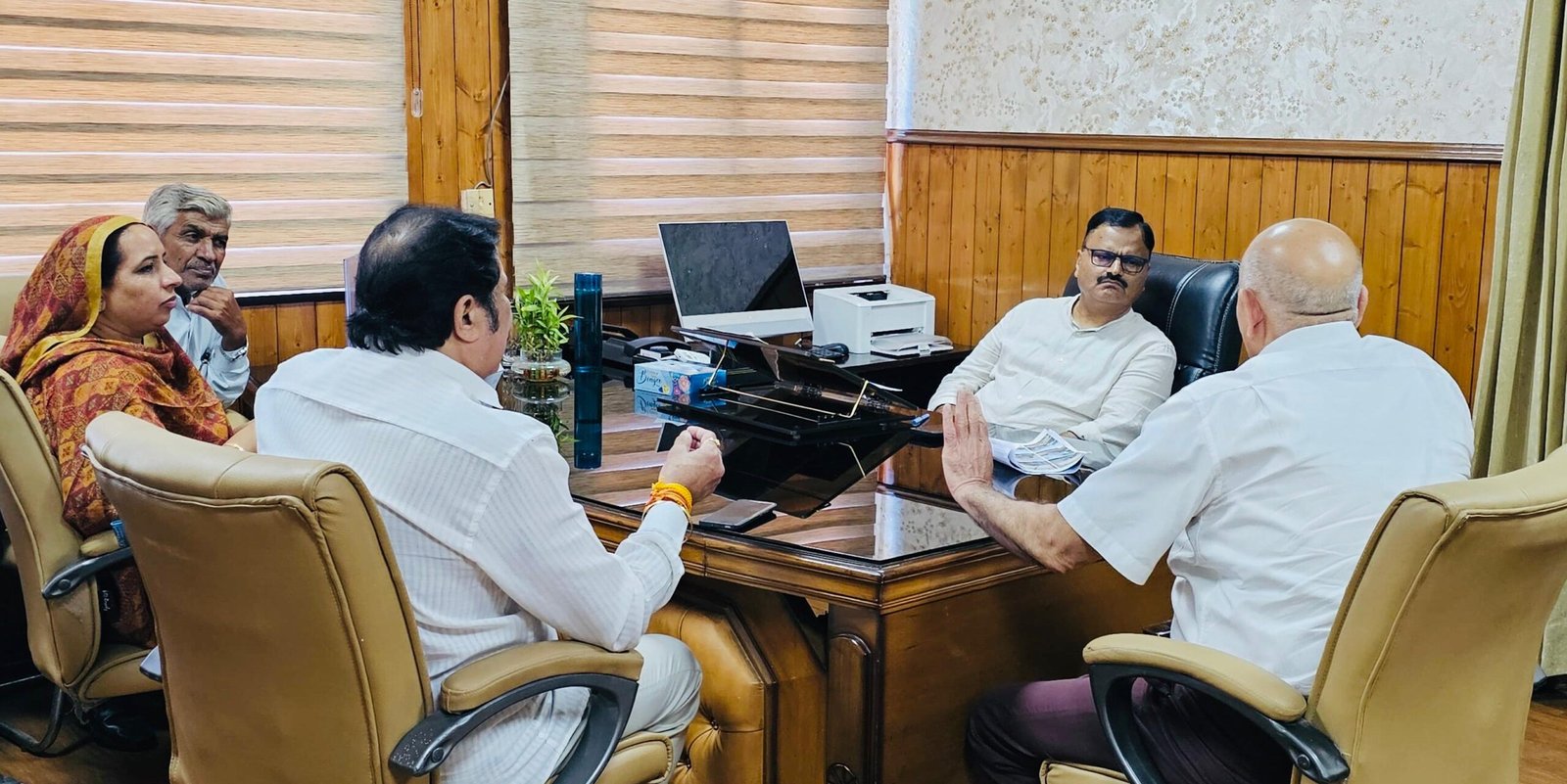
JAMMU, Sept 2: In the aftermath of the devastating floods that disrupted life across Poonch district, Minister for Jal Shakti, Forest, Ecology & Environment, and Tribal Affairs, Javed Ahmed Rana, on Monday conducted a comprehensive virtual review of the ongoing relief and restoration operations.
The Minister called for efficient planning, quick execution, and close departmental supervision to ensure that restoration work is carried out on a priority basis. He stressed that the immediate focus must remain on resuming essential services including water, electricity, road connectivity, and food supply, particularly in remote and vulnerable areas.
Rehabilitation and Relief Support
Rana directed officials to adopt a comprehensive rehabilitation strategy for affected families while ensuring fair and swift distribution of compensation and relief support, with special focus on the most impacted populations. He also instructed the Rural Development Department to take up repair and rebuilding of houses and protection works in rural areas as a special case to speed up recovery.
Education and Safety Audits
Emphasizing the safety of students, the Minister ordered structural audits of flood-affected schools and immediate repairs of vulnerable buildings. Deputy Commissioner Poonch, Ashok Kumar Sharma, informed that 18 schools suffered damage, primarily to boundary walls, and that four schools require urgent restoration to ensure operational safety.
Roads and Connectivity
On road infrastructure, the DC reported that in Mendhar subdivision, 71 roads were damaged—65 have already been restored, while the rest are under repair. In Surankote subdivision, 10 damaged roads are being restored on priority, and most roads under the PMGSY scheme have already been made motorable.
Water, Power, and Healthcare Response
Highlighting the critical link between electricity and water supply, Rana stressed that restoration of power is vital as many water schemes are electricity-driven. Of the 162 water supply schemes damaged, a majority have been partially restored with full restoration in progress.
On healthcare, the DC informed that medical camps will be organized in the next 2–3 days in flood-affected and vulnerable villages. To strengthen outreach, the Minister proposed deploying Mobile Medical Units (MMUs) on a 10-day rotational basis across Mendhar, Surankote, and Haveli subdivisions.
Food Security and Long-Term Mitigation
The Minister also instructed departments to maintain adequate buffer stocks of food grains and essential supplies in cut-off areas to prevent shortages during future emergencies. He further called for scientific mapping of vulnerable and high-risk zones, underscoring that data-driven strategies are crucial for disaster preparedness, timely interventions, and long-term risk reduction.
Commitment to Resilient Communities
Reiterating the Omar Abdullah Government’s commitment, Rana assured that the administration is fully dedicated to rebuilding stronger, safer, and more resilient communities in Poonch, combining immediate relief efforts with long-term resilience planning.

Recent Comments