
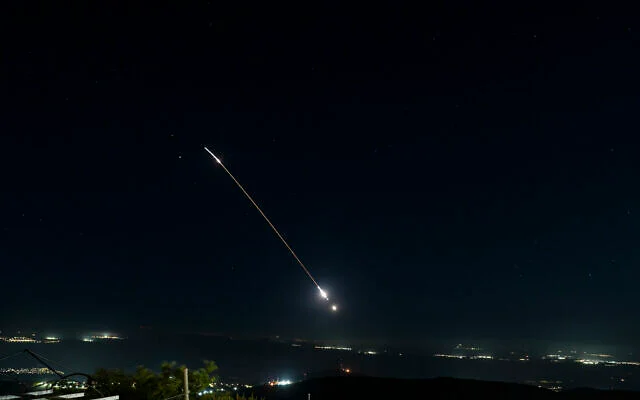
Tel Aviv/Dubai/New Brunswick, Jun 8: Israel on Monday said it carried out airstrikes on military targets in western and central Iran, escalating tensions in the region despite reported efforts by US President Donald Trump to prevent further military action and keep peace negotiations with Tehran on track.
The Israeli military said its air force targeted several military installations inside Iran, hours after Iran launched missiles towards Israel in retaliation for Israeli strikes in Lebanon. The exchange marked the most serious challenge yet to the fragile ceasefire that has largely held since April.
According to reports, Trump urged Israeli Prime Minister Benjamin Netanyahu to avoid additional attacks, arguing that a breakthrough in negotiations with Iran could be within reach. A US official told media outlets that Trump had conveyed to Netanyahu that both sides were close to securing a deal and that further escalation could jeopardise diplomatic efforts.
Speaking to the Financial Times, Trump downplayed the impact of the latest hostilities on ongoing talks with Tehran.
“It’s not going to have any impact on the deal,” Trump said, asserting that the United States remained in control of the diplomatic process.
The latest flare-up follows Israeli strikes on Beirut’s southern suburbs on Sunday, the first such attack since Washington unveiled a Lebanon ceasefire proposal last week. The strike prompted Iran to launch a barrage of missiles at Israeli targets, increasing fears that the wider regional conflict could reignite.
Tehran has consistently maintained that any agreement with Washington must include a durable ceasefire in Lebanon. Iran’s parliamentary speaker and chief negotiator, Mohammad Baqer Qalibaf, warned that US military installations and Israeli assets could become “legitimate targets” if hostilities continue and ceasefire understandings are violated.
Trump, however, remained optimistic about reaching an agreement with Iran and reiterated that diplomacy remained the preferred path despite recent military exchanges.
The conflict has remained deadlocked since April, when a ceasefire paused direct attacks between Iran and the US-Israel alliance. However, tensions have persisted over Lebanon, where Israeli operations against Hezbollah continue and cross-border attacks have not fully ceased.
The ongoing crisis has also disrupted global trade and energy markets. Iran continues to exert pressure around the Strait of Hormuz, a strategic route through which nearly one-fifth of the world’s oil supply passes, while the United States has maintained restrictions on Iranian ports.
Negotiations between Washington and Tehran are centred on ending hostilities and addressing concerns over Iran’s nuclear programme. The United States is seeking stronger commitments than those contained in the 2015 nuclear agreement, while Iran is demanding sanctions relief, access to frozen assets and recognition of its strategic interests in the region.
Meanwhile, Netanyahu faces growing domestic political pressure ahead of national elections later this year, with critics questioning his handling of both the conflict with Hezbollah and the broader regional crisis.
The latest exchange of strikes has underscored the fragile nature of current ceasefire arrangements and highlighted the challenges facing international efforts to secure lasting peace in West Asia.

Recent Comments